
Developer portal for financial APIs
Discovery Case Study • jpmorgan
Developers in the financial space need easy access to banking APIs. We were contacted by JPMorgan to help them surface their API library, bringing more potential users to their platform.
- Product discovery
- Design sprint
- User testing
- UX & UI design
the problem
Our client approached us to improve access to their financial API library. With it being hidden behind a paywall, our client was limiting who could access their APIs. Their drive was to become an industry leader in open-source financial technology and create better developer experiences overall.
Initial interviews
To get a better understanding of the problem and the client’s place in the market, we ran a series of interviews that spanned across two key audiences:
- Developers: in order to understand their approach to problems, their favourite solutions in the market today, and the problems they struggle with across API libraries.
- The bank's digital team: to understand their current API portal, their struggles with the current ways of working, and a better understanding of content like APIs, and user stories.
user personas
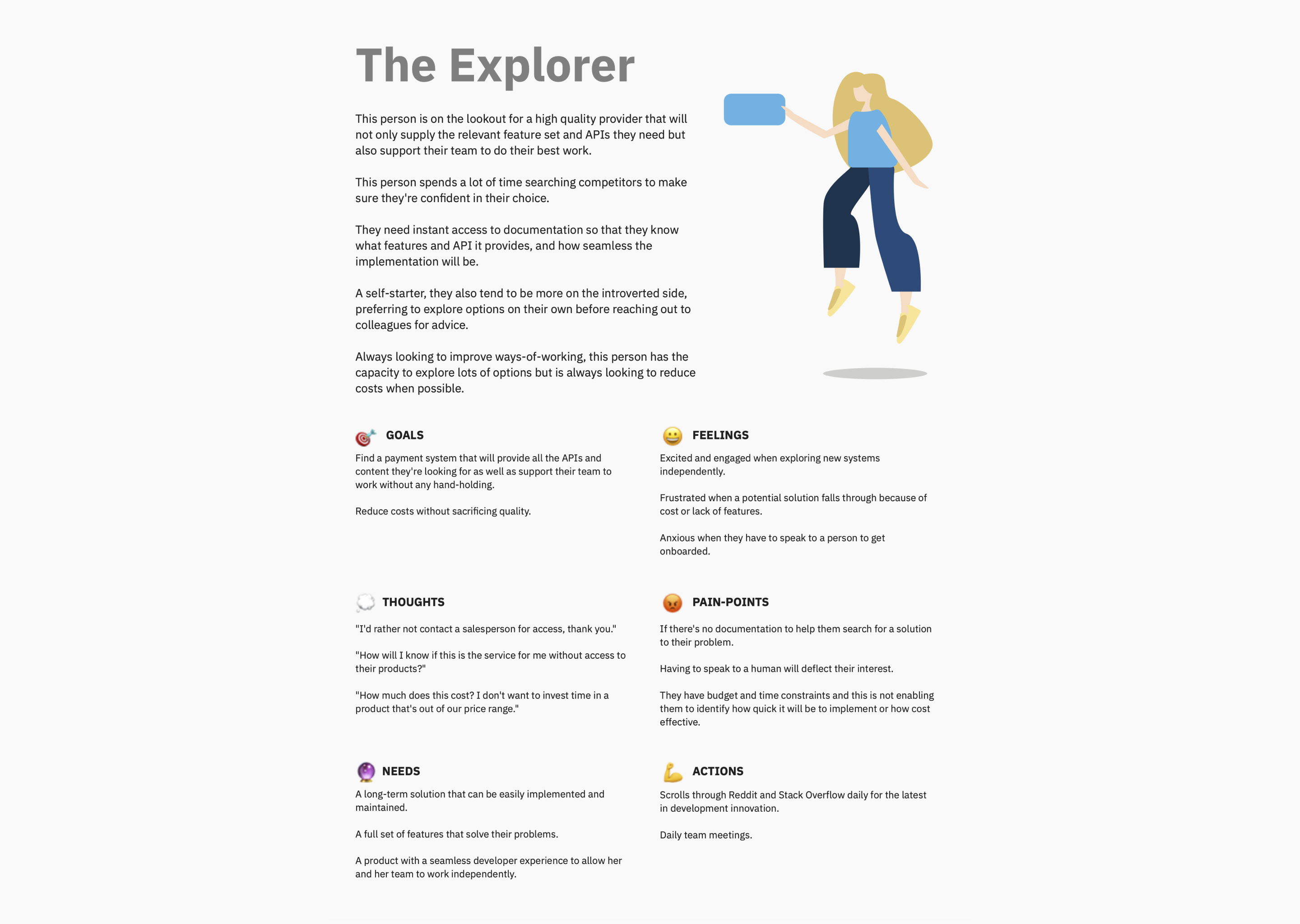
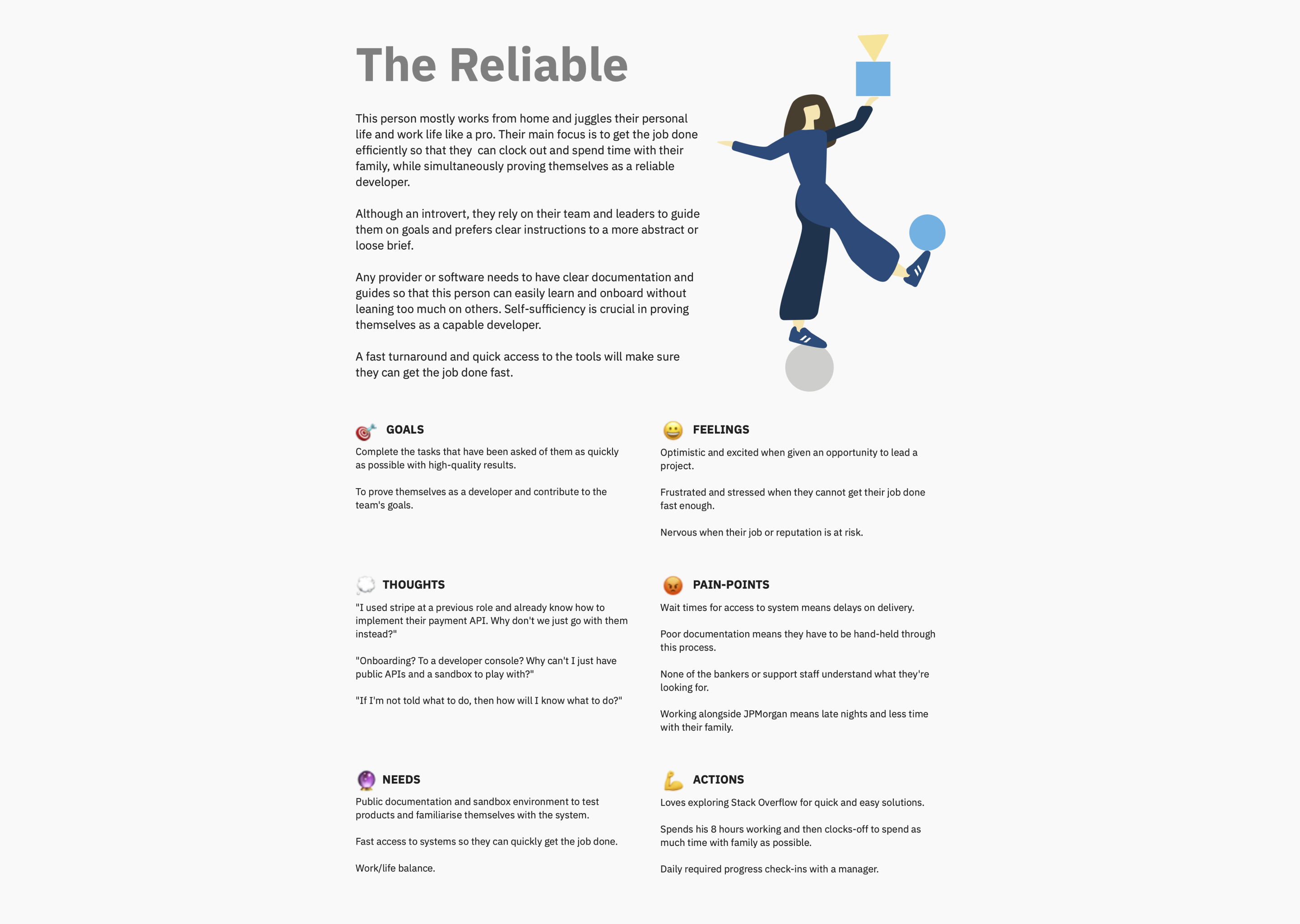
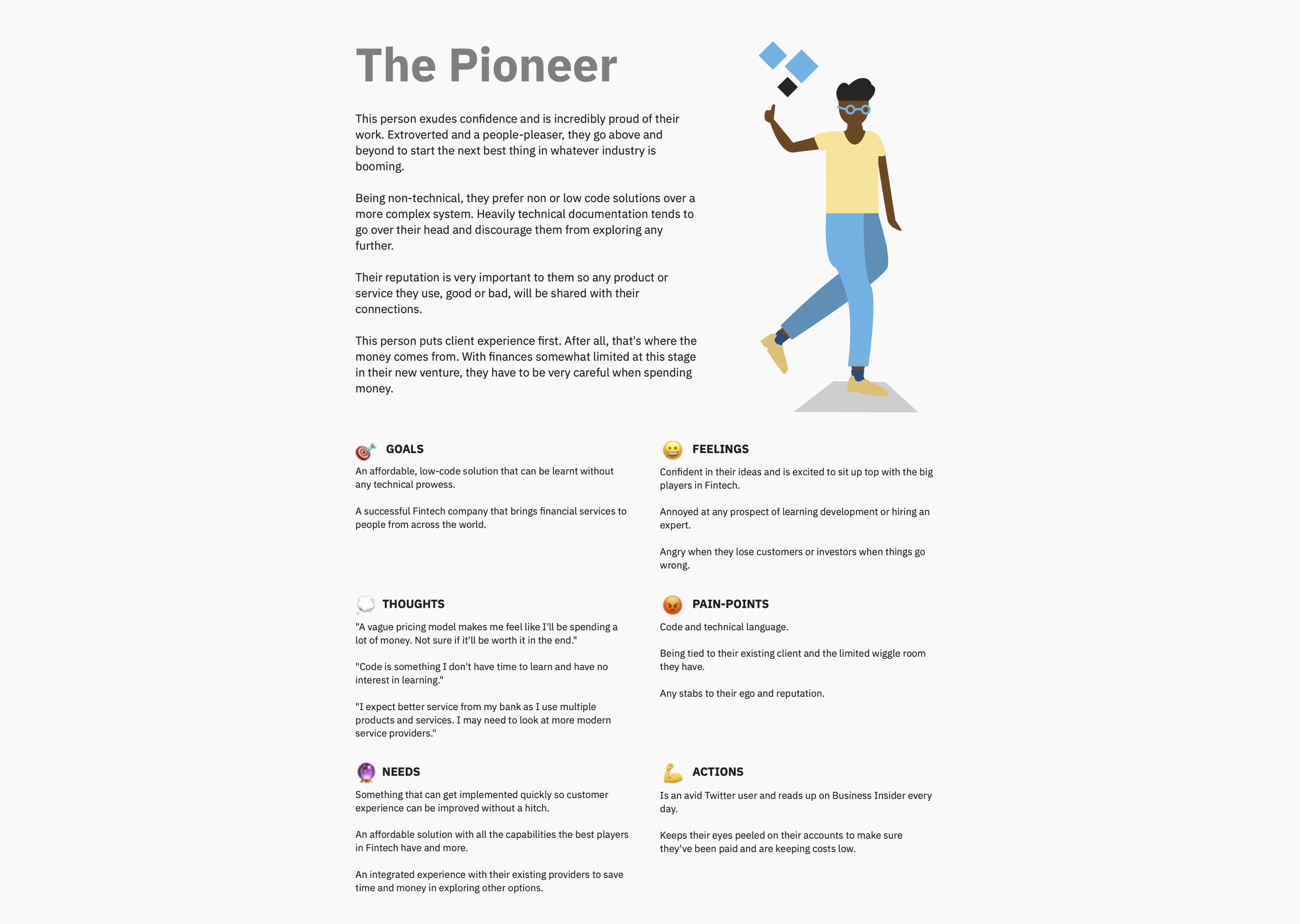
From our interviews, we created three personas based off the people we spoke to. This way, every decision we made throughout the design sprint process was made with our users in mind.
“Developers love to work independently and they want to be treated like adults. Typically, they'll look through documentation before talking to anyone. How can we allow them to be self-sufficient and work the way they like to?”
Peter Lawrence
Engineering manager
The design sprint

The discovery accumulated into a design sprint to help us research, prototype, and test over a 4 day period.
Day 1 - Map & Sketch
Day 2 - Decide & storyboard
Day 3 - Prototype
Day 4 - Test & learn
Day one - Mapping
On day 1, we determined our long-term objective and the problems to solve. They all related to four core themes:
API access
Easy onboarding
Quality resources
building a community
We decided to go with our most voted problem: API access. We decided on two core statements to start sketching for:
Can we create a site that is truly useful and not simply a regurgitation of existing content?
Can we break down the silos and have different groups that don't normally work together implement a solution?
Day two - sketching & deciding
The sketches were collected and we voted on our top ideas to convert into user journeys, We mapped these out onto stickies in Miro where we voted on which journey was the best solution and moved into the storyboarding phase.
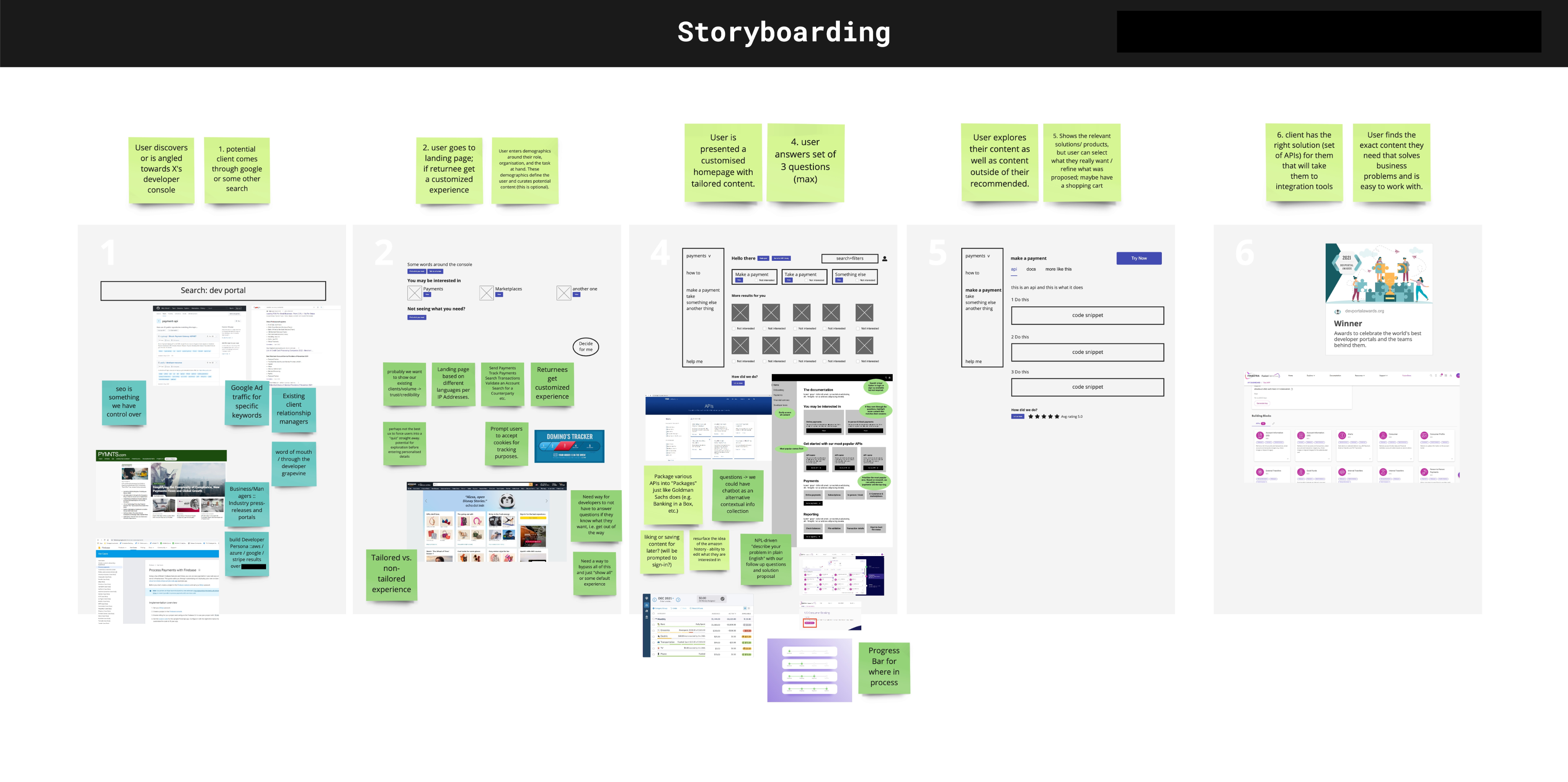
As a sprint team, we made a storyboard out of our chosen user journeys. This storyboard paved the way for day three, which was for prototyping.
Day three - rapid prototyping
- We followed supplied branding guidelines for the colours, fonts, and overall tone.
- We used IBM Carbon design system as a base and updated the components as we went.
- With this prototype we wanted to make sure we prioritised:
Use cases for real life examples
The collaboration tools for developers
Easy access to APIs and other documentation
Day four - test & learn
Positive feedback
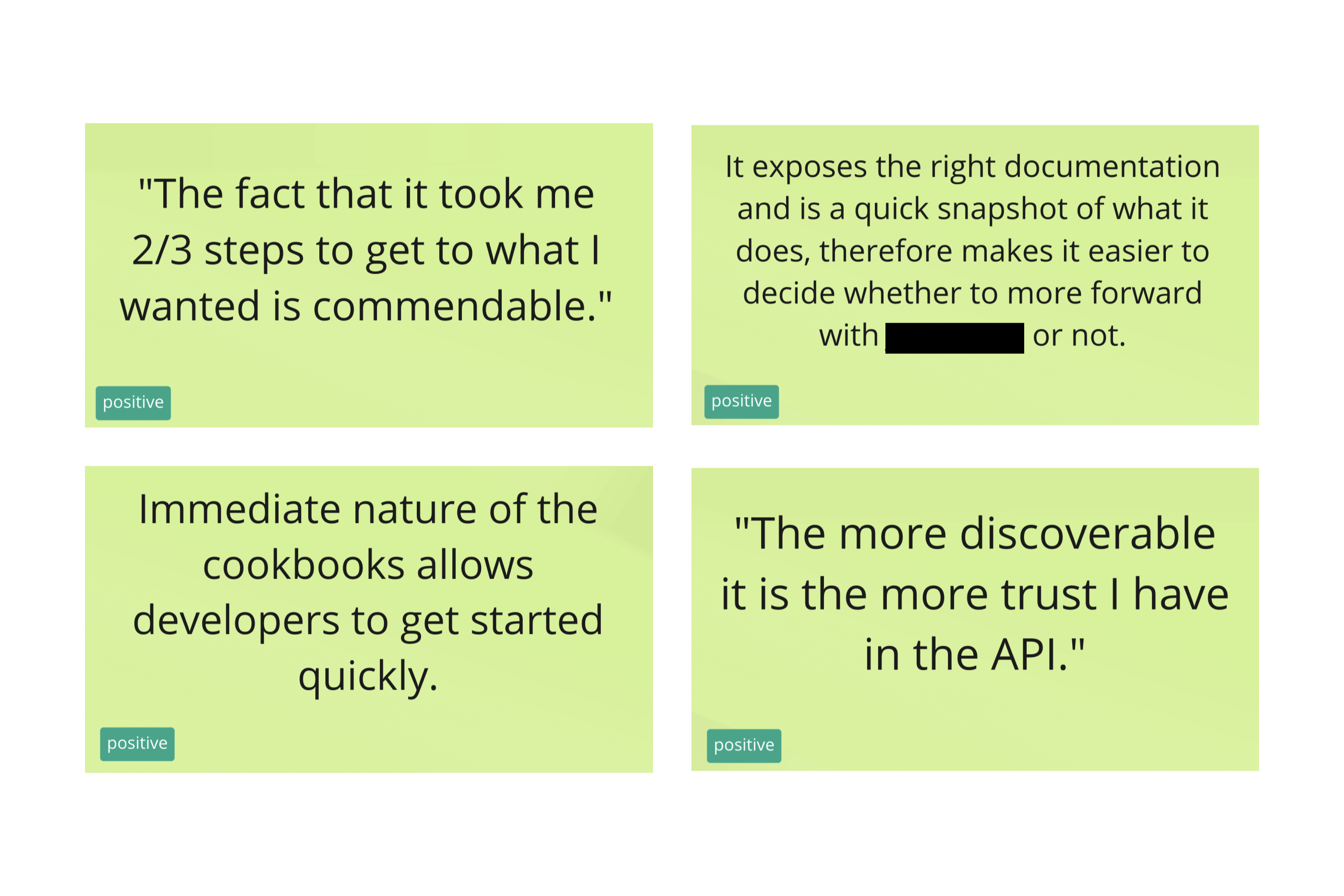
The concept of access was well received. The transparency of offerings gave users confidence to implement the API quickly and encouraged account registration to explore further.
issues
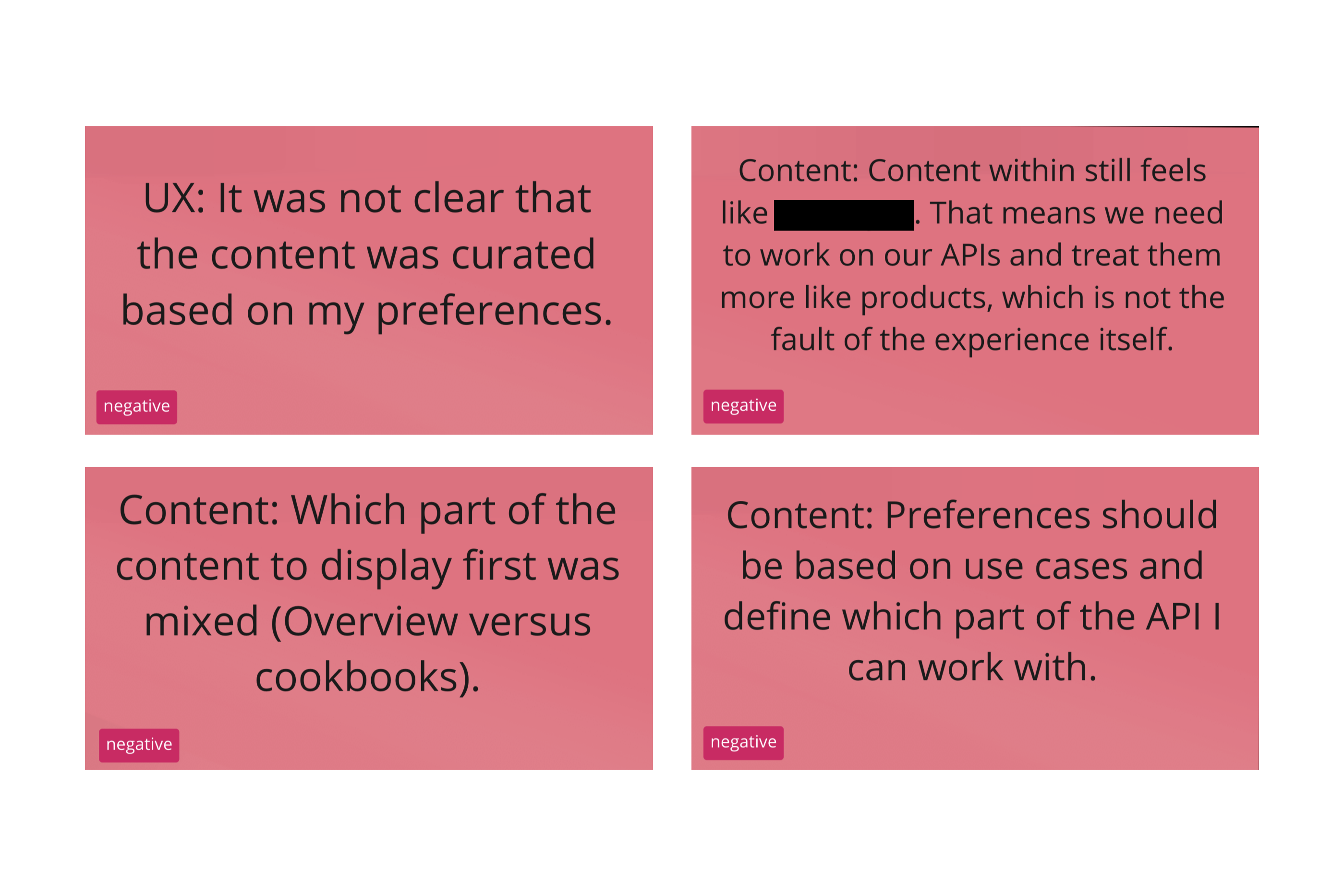
Users found the API content unclear, messy, and not specific enough to help them determine which parts to use. They also didn’t realise that the displayed content was tailored to their preferences, and they wanted those preferences to be more specific and informative.
Feedback from developers & client
The use case highlighted what I needed as a question and also displayed what else is available.
Anonymous patient
Engineering manager @ Dovetail
The navigation is all the things I am looking for. It's the first time I’ve seen JPMorgan offer something like this.
VP of product management (developer portal)
JPMorgan
The final product
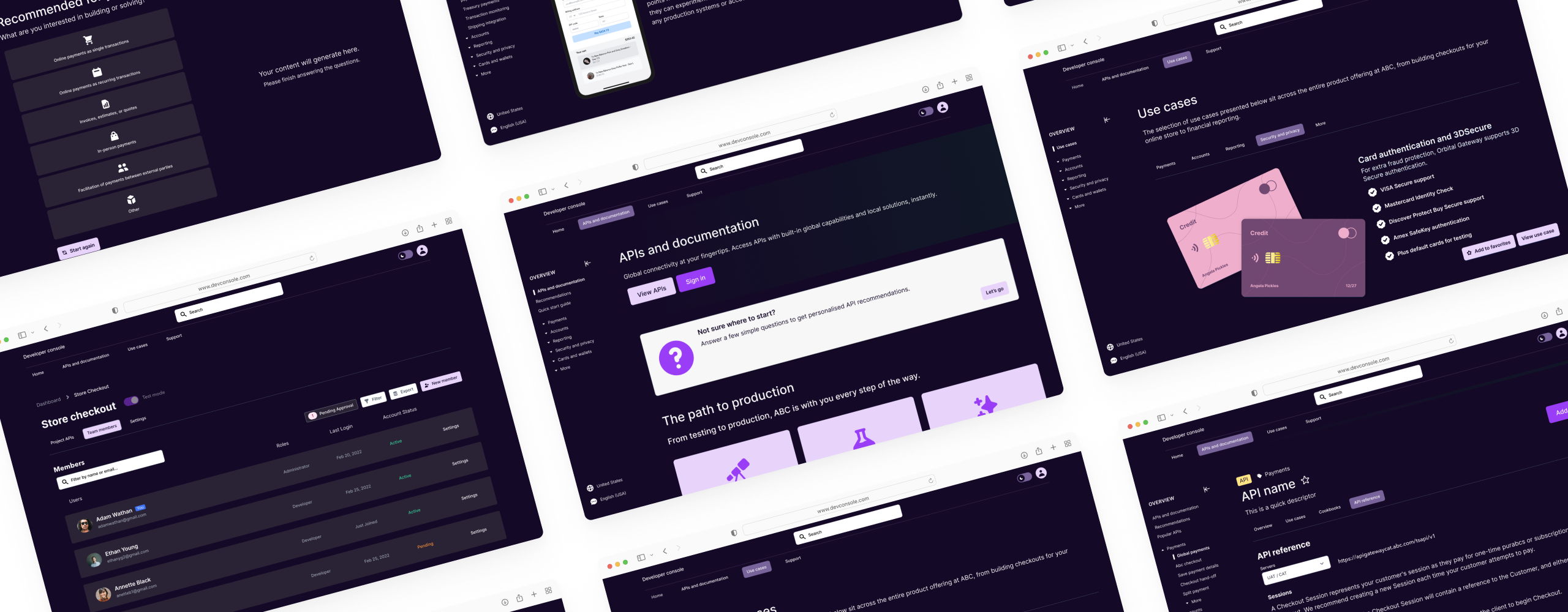
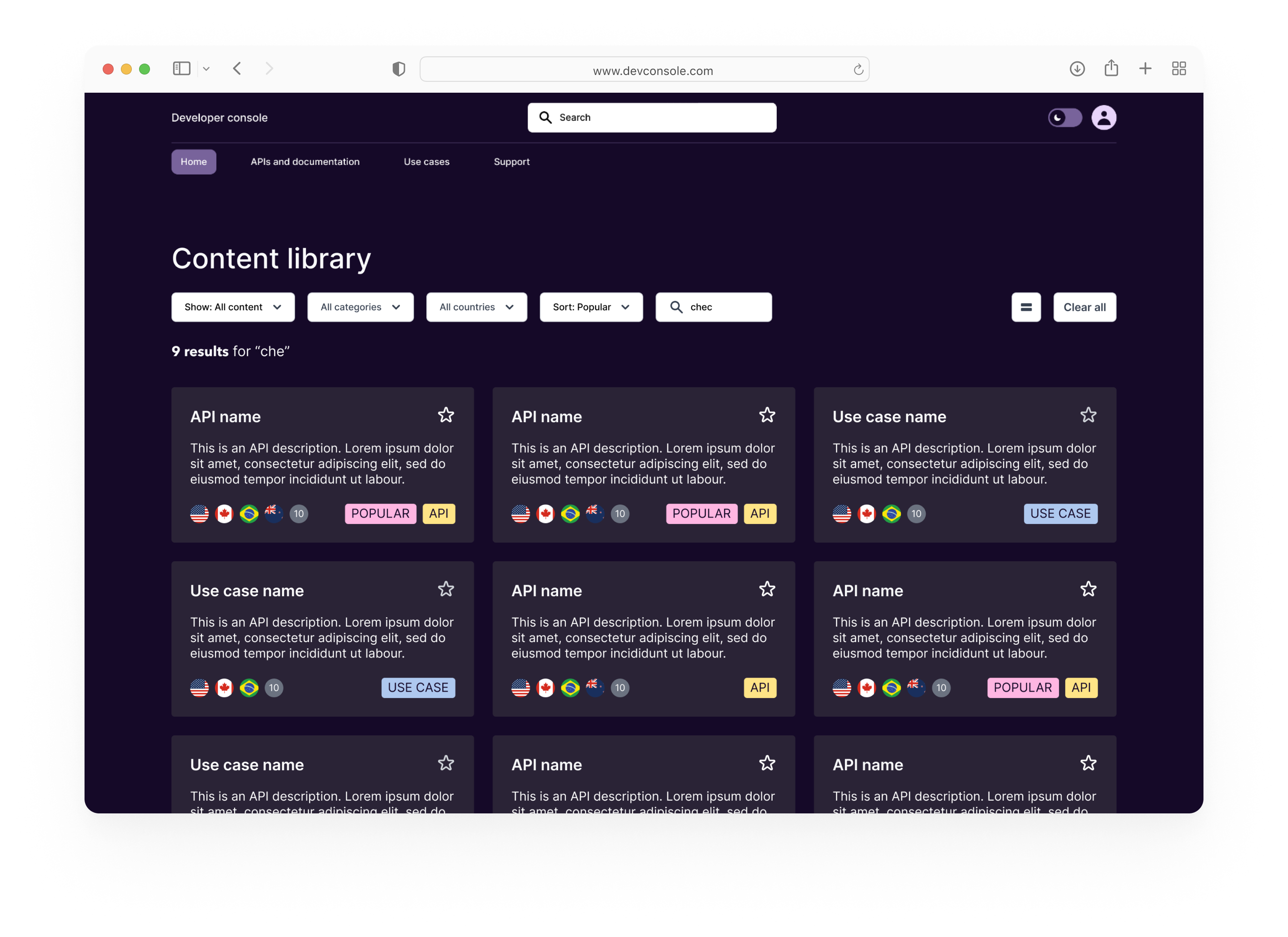
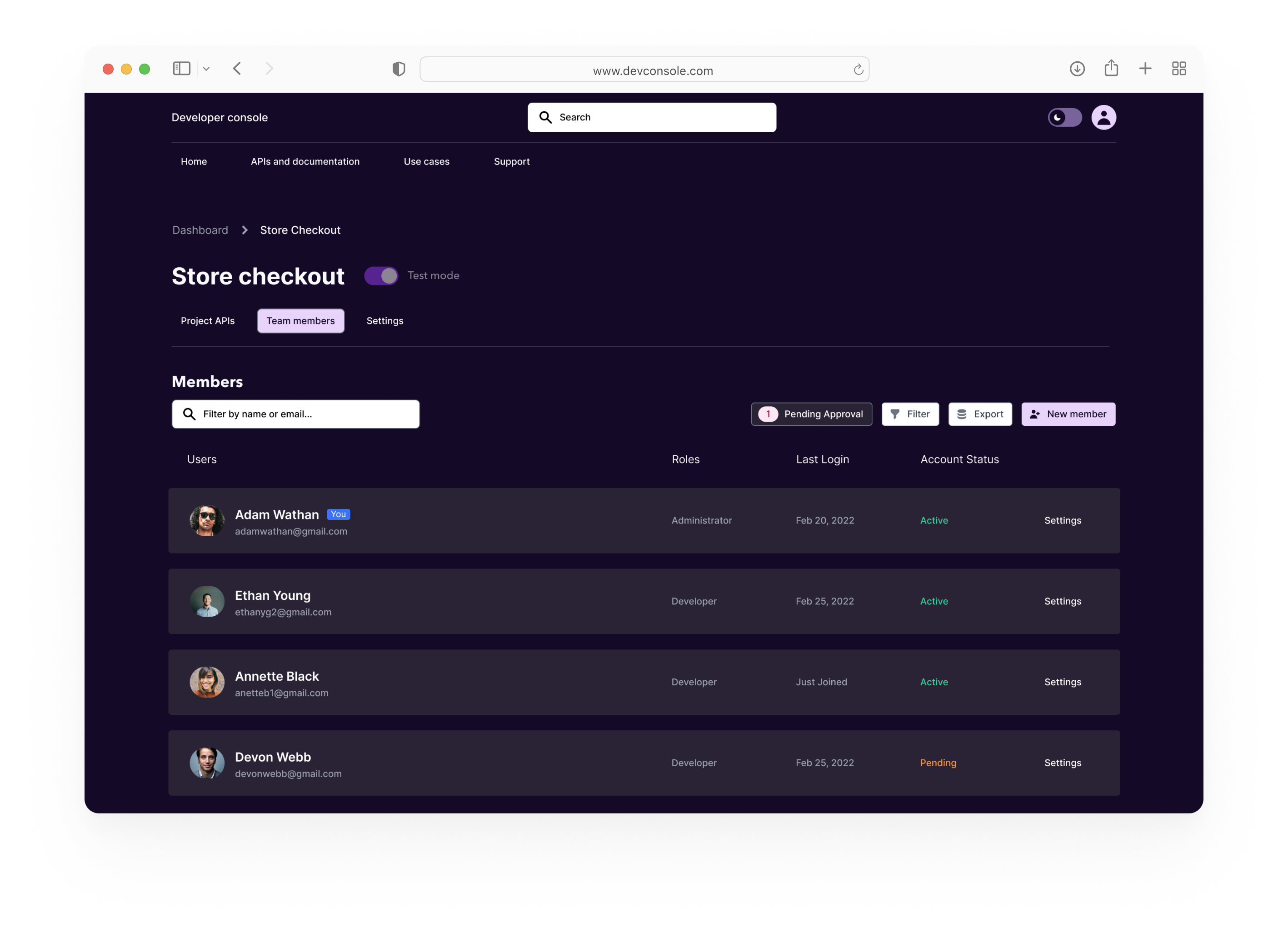
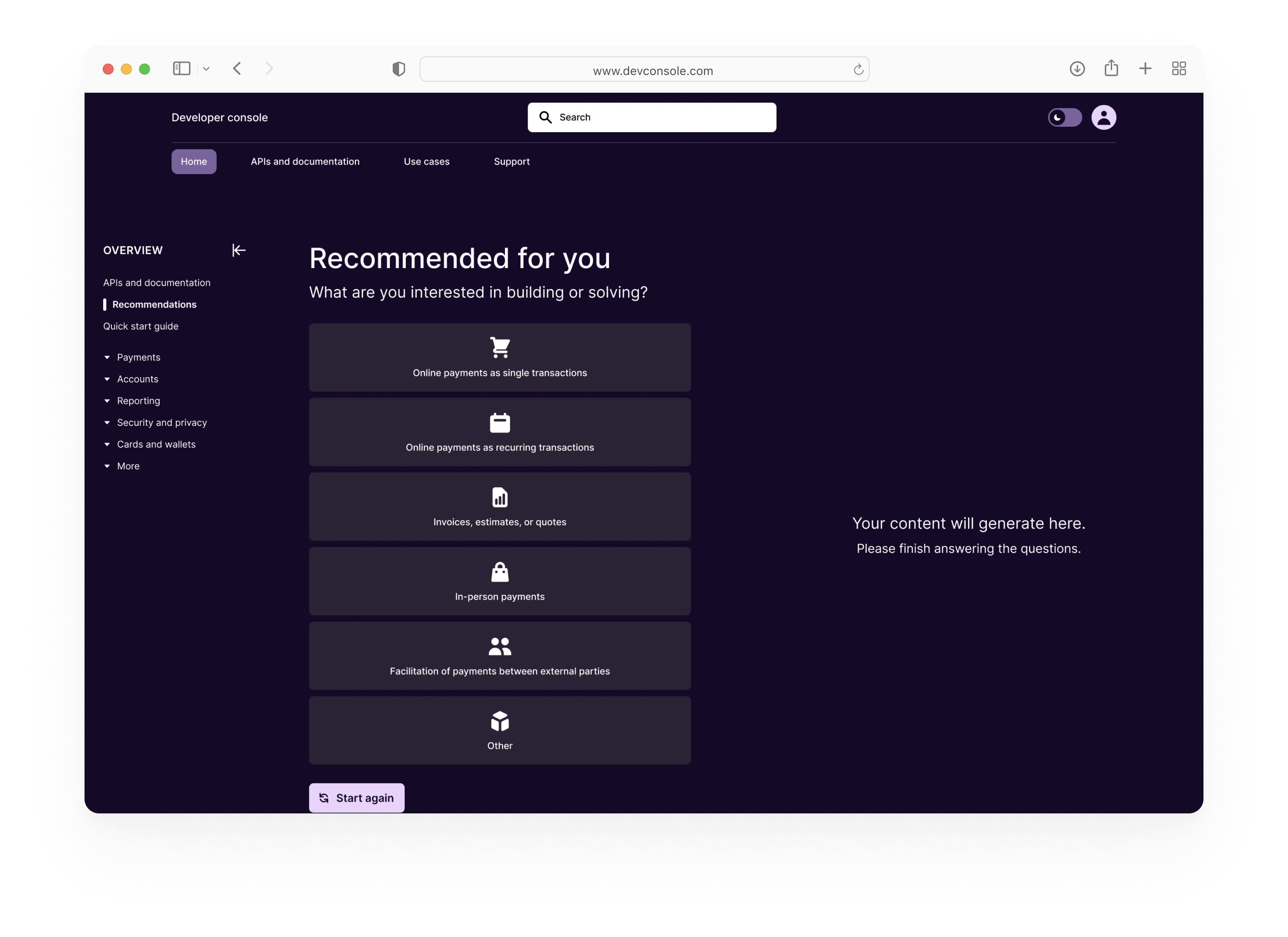
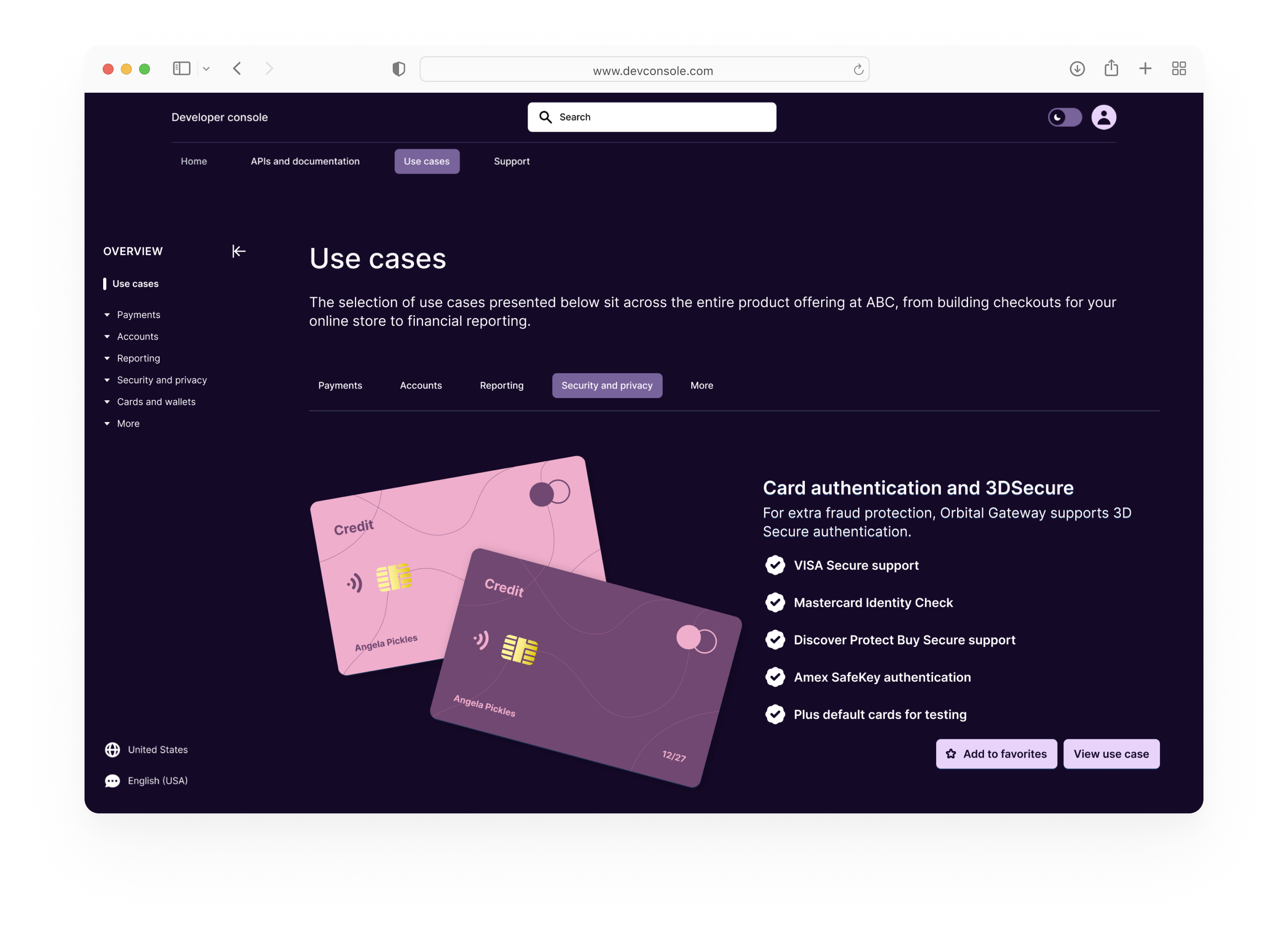
- Our developer platform was use-case first, building off of real life examples.
- Customisation and AI suggestions were added to help developers find exactly what they’re looking for and which parts to use.
- Free, unlimited browsing allows for developers to shop around before committing.
Feedback
The new API library is very efficient, making it easy to find what I need quickly and on my own.
Cameron
Developer @ JPMorgan
Working with the team to bring this portal to life has been a great experience. We hope to get this out to market soon so our APIs are more accessible than ever.
VP of product management (developer portal)
@ JPMorgan
Developer portal for financial APIs
Discovery Case Study • jpmorgan
Developers in the financial space need easy access to banking APIs. We were contacted by JPMorgan to help them surface their API library, bringing more potential users to their platform.
- Product discovery
- Design sprint
- User testing
- UX & UI design
the problem
Our client approached us to improve access to their financial API library. With it being hidden behind a paywall, our client was limiting who could access their APIs. Their drive was to become an industry leader in open-source financial technology and create better developer experiences overall.
Initial interviews
To get a better understanding of the problem and the client’s place in the market, we ran a series of interviews that spanned across two key audiences:
- Developers: in order to understand their approach to problems, their favourite solutions in the market today, and the problems they struggle with across API libraries.
- The bank's digital team: to understand their current API portal, their struggles with the current ways of working, and a better understanding of content like APIs, and user stories.
user personas
From our interviews, we created three personas based off the people we spoke to. This way, every decision we made throughout the design sprint process was made with our users in mind.
“Developers love to work independently and they want to be treated like adults. Typically, they'll look through documentation before talking to anyone. How can we allow them to be self-sufficient and work the way they like to?”
Peter Lawrence
Engineering manager
The design sprint
The discovery accumulated into a design sprint to help us research, prototype, and test over a 4 day period.
Day 1 - Map & Sketch
Day 2 - Decide & storyboard
Day 3 - Prototype
Day 4 - Test & learn
Day one - Mapping
On day 1, we determined our long-term objective and the problems to solve. They all related to four core themes:
API access
Easy onboarding
Quality resources
building a community
We decided to go with our most voted problem: API access. We decided on two core statements to start sketching for:
Can we create a site that is truly useful and not simply a regurgitation of existing content?
Can we break down the silos and have different groups that don't normally work together implement a solution?
Day two - sketching & deciding
The sketches were collected and we voted on our top ideas to convert into user journeys, We mapped these out onto stickies in Miro where we voted on which journey was the best solution and moved into the storyboarding phase.
As a sprint team, we made a storyboard out of our chosen user journeys. This storyboard paved the way for day three, which was for prototyping.
Day three - rapid prototyping
- We followed supplied branding guidelines for the colours, fonts, and overall tone.
- We used IBM Carbon design system as a base and updated the components as we went.
- With this prototype we wanted to make sure we prioritised:
Use cases for real life examples
The collaboration tools for developers
Easy access to APIs and other documentation
Day four - test & learn
Positive feedback
The concept of access was well received. The transparency of offerings gave users confidence to implement the API quickly and encouraged account registration to explore further.
issues
Users found the API content unclear, messy, and not specific enough to help them determine which parts to use. They also didn’t realise that the displayed content was tailored to their preferences, and they wanted those preferences to be more specific and informative.
Feedback from developers & client
The use case highlighted what I needed as a question and also displayed what else is available.
Anonymous patient
Engineering manager @ Dovetail
The navigation is all the things I am looking for. It's the first time I’ve seen JPMorgan offer something like this.
VP of product management (developer portal)
JPMorgan
The final product
- Our developer platform was use-case first, building off of real life examples.
- Customisation and AI suggestions were added to help developers find exactly what they’re looking for and which parts to use.
- Free, unlimited browsing allows for developers to shop around before committing.
Feedback
The new API library is very efficient, making it easy to find what I need quickly and on my own.
Cameron
Developer @ JPMorgan
Working with the team to bring this portal to life has been a great experience. We hope to get this out to market soon so our APIs are more accessible than ever.
VP of product management (developer portal)
@ JPMorgan

Developer portal for financial APIs
Discovery Case Study • jpmorgan
Developers in the financial space need easy access to banking APIs. We were contacted by JPMorgan to help them surface their API library, bringing more potential users to their platform.
- Product discovery
- Design sprint
- User testing
- UX & UI design
the problem
Our client approached us to improve access to their financial API library. With it being hidden behind a paywall, our client was limiting who could access their APIs. Their drive was to become an industry leader in open-source financial technology and create better developer experiences overall.
Initial interviews
To get a better understanding of the problem and the client’s place in the market, we ran a series of interviews that spanned across two key audiences:
- Developers: in order to understand their approach to problems, their favourite solutions in the market today, and the problems they struggle with across API libraries.
- The bank's digital team: to understand their current API portal, their struggles with the current ways of working, and a better understanding of content like APIs, and user stories.
user personas
From our interviews, we created three personas based off the people we spoke to. This way, every decision we made throughout the design sprint process was made with our users in mind.
“Developers love to work independently and they want to be treated like adults. Typically, they'll look through documentation before talking to anyone. How can we allow them to be self-sufficient and work the way they like to?”
Peter Lawrence
Engineering manager
The design sprint
The discovery accumulated into a design sprint to help us research, prototype, and test over a 4 day period.
Day 1 - Map & Sketch
Day 2 - Decide & storyboard
Day 3 - Prototype
Day 4 - Test & learn
Day one - Mapping
On day 1, we determined our long-term objective and the problems to solve. They all related to four core themes:
API access
Easy onboarding
Quality resources
building a community
We decided to go with our most voted problem: API access. We decided on two core statements to start sketching for:
Can we create a site that is truly useful and not simply a regurgitation of existing content?
Can we break down the silos and have different groups that don't normally work together implement a solution?
Day two - sketching & deciding
The sketches were collected and we voted on our top ideas to convert into user journeys, We mapped these out onto stickies in Miro where we voted on which journey was the best solution and moved into the storyboarding phase.
As a sprint team, we made a storyboard out of our chosen user journeys. This storyboard paved the way for day three, which was for prototyping.
Day three - rapid prototyping
- We followed supplied branding guidelines for the colours, fonts, and overall tone.
- We used IBM Carbon design system as a base and updated the components as we went.
- With this prototype we wanted to make sure we prioritised:
Use cases for real life examples
The collaboration tools for developers
Easy access to APIs and other documentation
Day four - test & learn
Positive feedback
The concept of access was well received. The transparency of offerings gave users confidence to implement the API quickly and encouraged account registration to explore further.
issues
Users found the API content unclear, messy, and not specific enough to help them determine which parts to use. They also didn’t realise that the displayed content was tailored to their preferences, and they wanted those preferences to be more specific and informative.
Feedback from developers & client
The use case highlighted what I needed as a question and also displayed what else is available.
Anonymous patient
Engineering manager @ Dovetail
The navigation is all the things I am looking for. It's the first time I’ve seen JPMorgan offer something like this.
VP of product management (developer portal)
JPMorgan
The final product
- Our developer platform was use-case first, building off of real life examples.
- Customisation and AI suggestions were added to help developers find exactly what they’re looking for and which parts to use.
- Free, unlimited browsing allows for developers to shop around before committing.
Feedback
The new API library is very efficient, making it easy to find what I need quickly and on my own.
Cameron
Developer @ JPMorgan
Working with the team to bring this portal to life has been a great experience. We hope to get this out to market soon so our APIs are more accessible than ever.
VP of product management (developer portal)
@ JPMorgan